

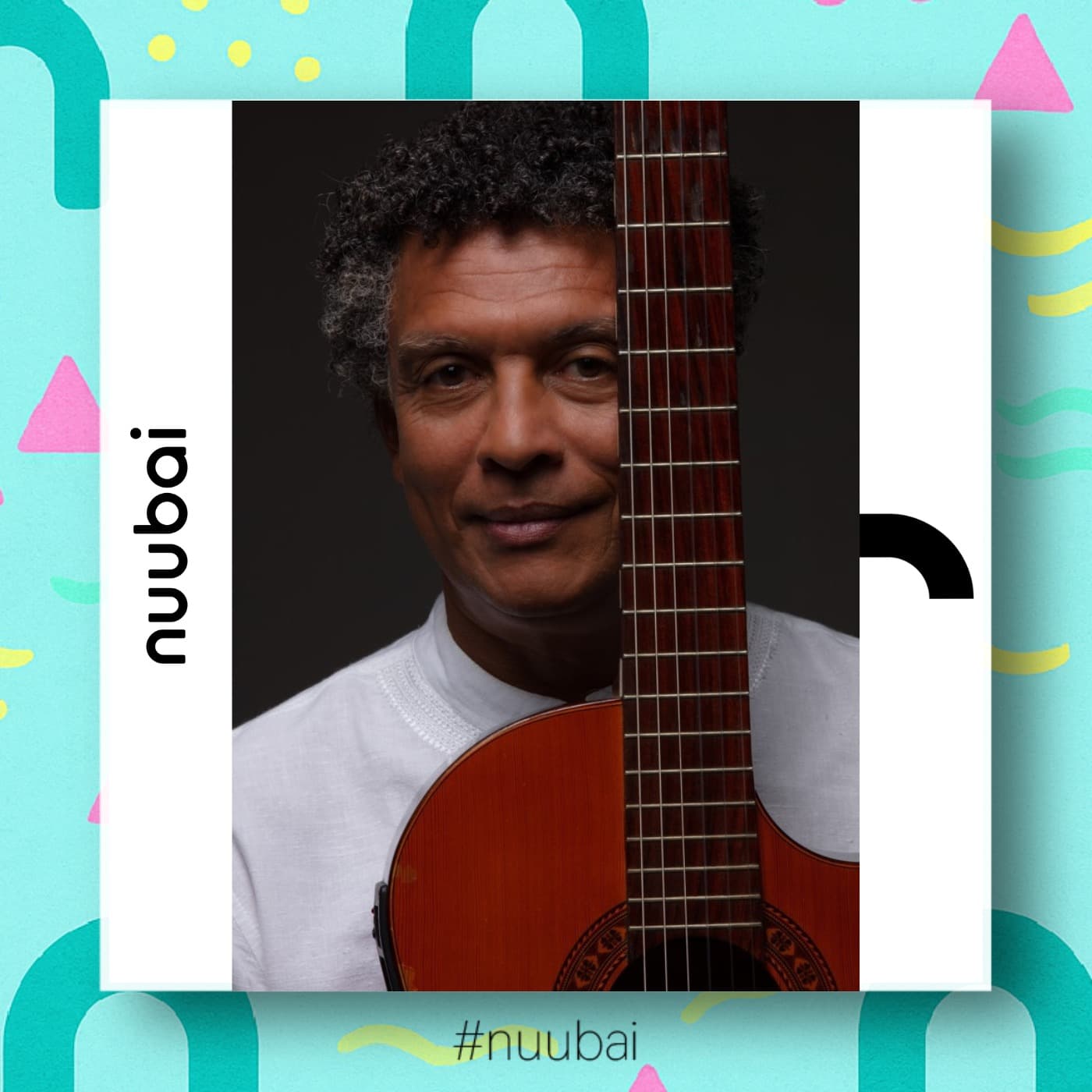
[ The Pela Paz festival is approaching — an event that came into being naturally, yet with a defining intensity, calling to mind one of the works by the album's author and the festival's guiding spirit: Mário Lúcio Sousa, and his album Mar e Luz. At nuubai, we believe that an artist's creative thought expresses itself across many forms. So we offer our followers an album and a festival made of the same essence. ]
"Mar e Luz" is probably one of the most original and compelling albums in Mário Lúcio's catalogue. The dense instrumentation that characterises so much of his work gives way here to the beauty of the simple — guitar lines drawn with care, voice, and the precise underlining of specific musical details, with the occasional touch of one additional instrument or another.
On this record, Mário strips back and allows himself to be held by nature and lived experience, by the Sea and Light, and by what he calls Maré Luz — a state in which restless love searches for what brings us peace.
Maré Luz, as the author tells it, was painted during a journey through the islands — short stays, each one a lived experience, undertaken during a period of personal searching.
The album opens on the "Ilha de Santiago," written in São Vicente, during a stop on that island where Mindelo received him. The piece took on a life of its own and became a fixture at every Mário Lúcio Sousa concert. Later, and with great delicacy, the island-poem was lent to Mayra Andrade, who, following the composer's own example, carries it with soul and feeling.
The journey through the islands continues. After Mindelo, saturated by the silences born from the mountains of Santo Antão, he moves on to the island of Fogo, where he encounters the Vulcãozinho. He walks its streets, gazes at the volcano in wonder, befriends it — in pure moments of Sentimento, which he describes so well in the track of that name. In fact, the whole album seems governed by this emotional state. Feeling and sensitivity may well have been the founding impulse behind "Mar e Luz."
Sound — alongside silence — also appears as a guiding thread throughout the journey. Dense at times, then light as the conversations left behind on country roads. The traditional rhythms of Santiago are celebrated in the words and notes of "Tabanka de Tchom Bom," where a play of voices evokes the unique sonorities of the búzios — shells that carry the sea. The Finason reference arrives in a beautiful duet with Mayra Andrade, a gentle story of mutual deserving — merecimento ku merecedo — told with such clarity it feels like a real story of Djosé and Djuana that found its way onto the composer's page.
"Mar e Luz," the title track, marks the meeting between Mário Lúcio and the album's third guest — Luís Represas.
Another surprise comes with "Eat Me," an almost-blues lament where the raw and minimal instrumentation carries us toward a blend of roots sounds with touches of 1970s musical sensibility — a certain Caetano-ness from his earliest albums.
"Herança" offers a precious lyric, while "Deus Graça" asks that the children be shown the way — perhaps the same children he would, ten years later, invite to play in "Tema di Minis" from the album Funanight.
At a certain point, it is the woman's turn to be sung. Mário Lúcio calls on his friend Gilberto Gil to help him with the delicate task of celebrating the beauty of Nha Mudjer — she of the green almond eyes.
Across several tracks, Mário does not forget the protector of his Tarrafal — Santo Amaro, his beloved saint, who in this Maré Luz is also present and gifted, in the track "Toma-n Leba-n."
From feeling to feeling, leaping island to island in the flight of a bird — wrapped in Sea and Light — the composer strips himself bare and searches for that same state in his guitar. The two, in absolute complicity, merge into one, and everything becomes Maré Luz.
Text originally by Paulo Lobo Linhares, published in the print edition of Expresso das Ilhas, no. 969, 24 June 2020.