

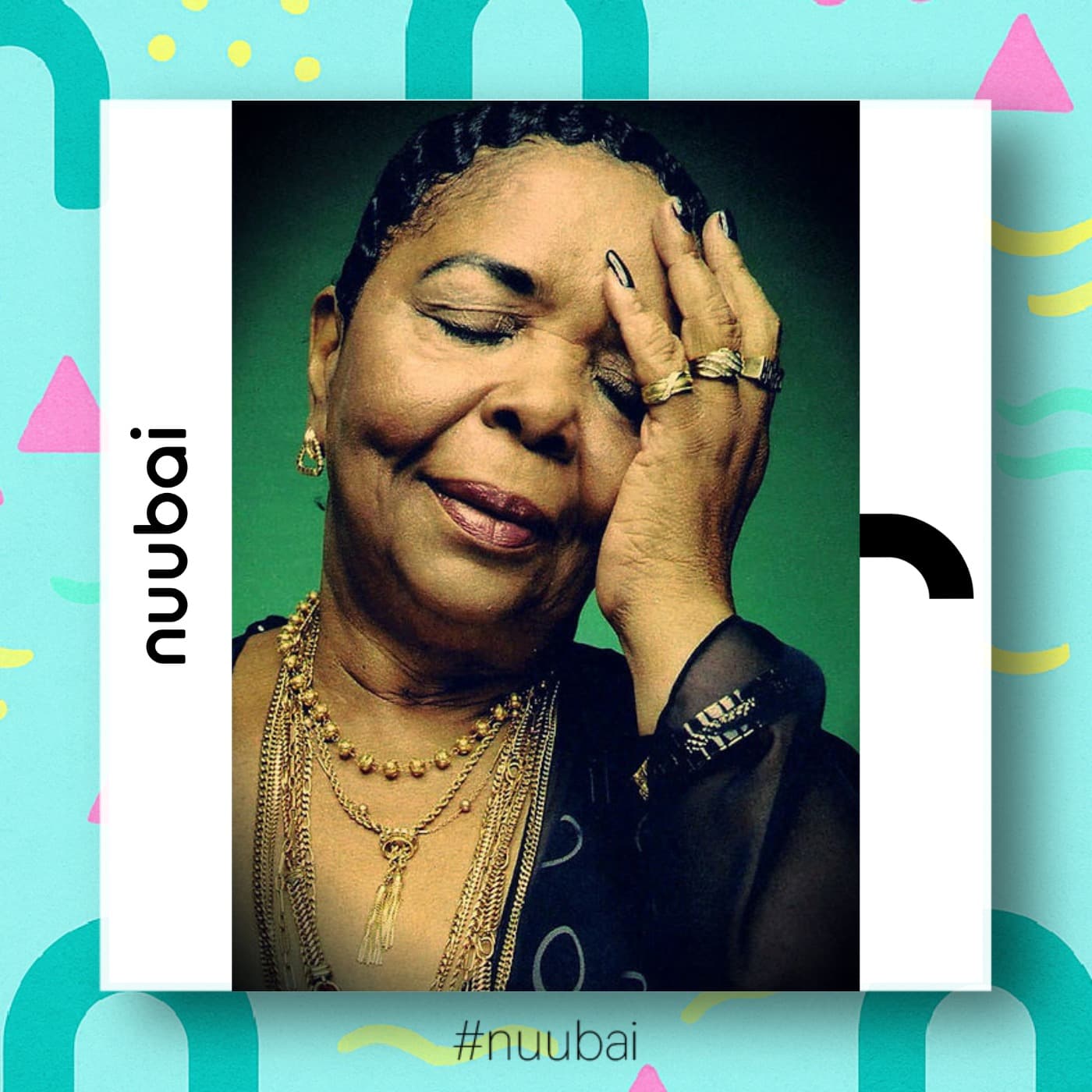
December is the month Cesária Évora left us.
It is also the month Celina Pereira departed, and later Dulce Matias. The month eternity took our divas. What remained is the music they left behind — because that, too, belongs to eternity.
I have always struggled to define the word "Diva." From its original meaning, derived from the word for goddess, comes a female figure made almost untouchable by the very status of being one.
In music, the closest and perhaps most technically accurate definition points to the lead female voice in opera — the famous prima donna. She also carries the idea of someone demanding, at times distant, less accessible or reachable to the ordinary follower.
In jazz, divas emerge from a different place: suffering, often exploited by husbands or managers, marked by pain and in some cases by addiction. Divas nonetheless, by virtue of their vocal scale and stage presence. For me, some of them genuine heroines.
In Cabo Verde, I believe we are too quick to award the word "Diva" to female voices who sometimes have barely a handful of years in the game. Words like "unique," "genius," or "singular" are thrown around far too easily. Worse still when the praise is amplified with the adjective "world-class," almost forgetting that — without questioning the international reach of our music — caution is required when speaking about musicians, especially in post-mortem tributes. In those speeches by the so-called people who know, an artist's value is sometimes multiplied by an infinity that exists only in the speaker's own head, sliding into emotional unrealism. Music is also factual.
With that said, defining the word "Diva" remains difficult for me. So, with due care and respect for its weight, I define it in my own terms:
A female figure with a rare voice — secure in pitch, distinct in timbre — in whose singing you see the interior of a soul. What she sings and how she sings it does not presuppose pleasing anyone without first passing through her own approval. She sings for herself, and in doing so, naturally enchants those who listen.
To that must be added the inevitable stage image — from posture to charisma. Even when something has been rehearsed, she never fully submits to the rules imposed by artistic directors or image managers. A Diva, when on stage, is in her real world, and what happens there overrides everything she was taught or asked to do. If she yields, it will only be to the audience.
When to all of this are added humility and generosity — a condition without which the true meaning of music cannot exist — and an aversion to empty sequins (as distinct from the ones that genuinely shine), then we are close to what it means to be a Diva.
I land, then, on the islands. I have my international divas, above all in world music and jazz. But in our islands too there are names that approach this definition — which, I repeat, for me is not rigid, but felt. To be a Diva is to transmit that feeling.
In Cabo Verde, for me, there is one name. I do not know if it is the only one, but there will be few others: Cesária Évora.
Cesária Évora is a Diva in being, in feeling, and in what she makes others feel. Hers is a voice of its own timbre. She owned a stage where, through simplicity alone, everything became sequins that shone.
Hers was humility and generosity, sustained across an entire career — from the bars to the most famous stages in the world. I saw her on several national and international stages, where she never repeated herself, yet was always the same — a sameness that made her simply: Cesária Évora.
The so-called people who know, who catalogue artists only after death and never during life, repeatedly try to force the discovery of the "new Cesária Évora." But Cesária was — and remains — one of a kind. Unique in quality, in charisma, and in voice, all wrapped in humility and generosity.
And so, in this month of December, on the 17th — the date that took three female voices from us — we remember that Cesária left in 2011. But being a Diva is also a form of eternity. And that eternity will remain in our music forever.