
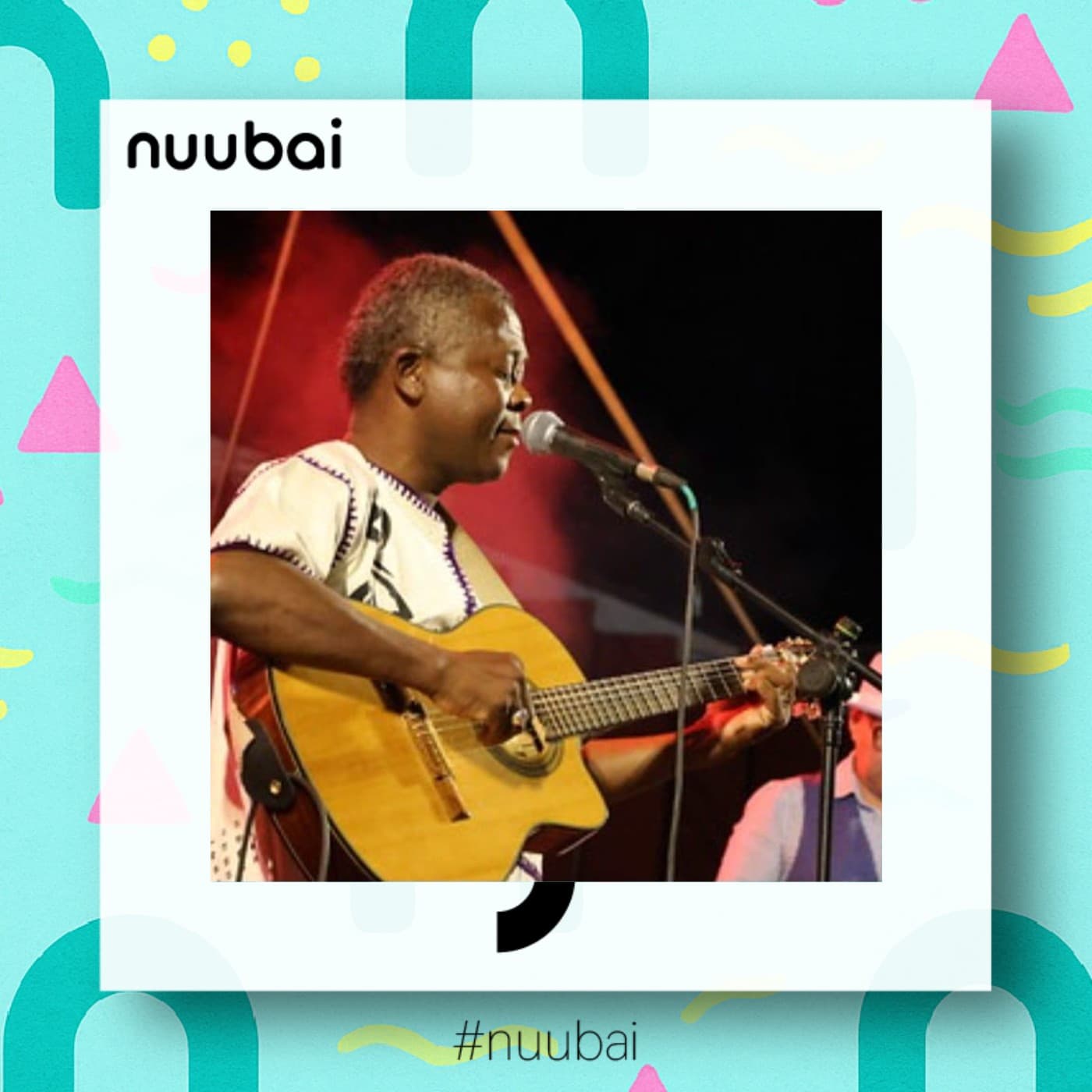
Tibau released two videos from a series that will bring more, where he combines the beautiful "Muganga" – his most recent work – with images of small stories, always filmed on his island of Maio. Simple videos to match, yet intense in their purity. For Tibau, music only has to respect music itself – the rest flows.
The video for the track “Luz do Sol” — one of the two already released — has the remarkable ability to pull us into its setting, and before we realise it, we’re already on the beach “di Calheta”, stepping out of houses that still have wooden shutters and half-doors, dragging our slippers through the village, greeting passersby, watching fishermen arrive, and later in the afternoon playing ouril under the trees… in other words, fragments of life that allow us to “leba vida relaxadu” because we always have “un rai di sol”… If we imagine all this wrapped in instrumentation that avoids excess, where every sound feels rooted in place — we get a small film of striking intensity, of the village and its sunlit golden beaches.
Tibau has always been — and remains — one of the most complete composers and musicians in our music.
He belongs to that class of composers who often remain “hidden”, only to be discovered when truly listened to… and then the beauty of what we hear takes over. We dive into what he offers and begin to uncover so much — everything is simple beauty… so many songs we had already known through other performers… melodies we had grown used to whistling from our inner discography, where only songs that cross the barrier of the self and settle deep within our musical subconscious can remain. They stay there, resurfacing in whistles, in sung refrains… whenever we feel good and crave our own music. They endure… beyond time.
In his alternative stance toward the industry and career path — in choosing to create without waiting on others — Tibau stands out. Musically, he has never stopped producing. With or without a label, with or without support — national or from his island — he has never ceased making his work.
The quality of his compositions and music (including the musicians who accompany him) has always aimed upwards.
Brazilian journalist Nelson Mota once said that the beauty of bossa nova lyrics lies precisely in saying everything through such simple words and expressions… a craft for masters. I believe Tibau fits this definition. His lyrics are simple, singing of lived experiences, love, and his island — the island of Maio. In fact, Tibau may well be one of the Cabo Verdean composers whose bond with his island is most vividly expressed. Tibau is Maio, and together they become the breeze and calm of its beaches, expanding outward into the sea and the world. Mornas, coladeiras and mazurkas form the backbone of most of his compositions. When other artists revisit Tibau, songs are reborn — such as “Carabiloque” by Tete Alhinho, or “Amor Profundo” by Bertânia Almeida — which I personally place among the finest interpretations in our music.
Returning to his musical output, beyond quality, Tibau surprises with every project.
I recall the album “Pupkulies + Rebecca plays Tibau”, where his compositions are reinterpreted through electronic textures, resulting in a fusion of Cabo Verdean tradition with contemporary musical trends — wrapped in high quality.
Last year he gave us “Muganga” — where he once again went beyond the expected. To the usual strength of his compositions, he added a group of internationally renowned musicians, with a particularly powerful brass section.
In Muganga, new sonic elements emerge once more, leaving a clear mark on our music.
It was undoubtedly one of the standout albums of last year, alongside “Descobri” by Bertânia Almeida. In both albums, the track “Amor Profundo” almost links the two through a shared smile — two interpretations of the same piece across two major works in our music.
Between these two albums, Tibau also released “7 músicas”. The mythical number 7.
Looking at “Pupkulies + Rebecca plays Tibau” and “Muganga”, both albums carry intertwined stories — beautiful ones — that naturally reveal Tibau as a storyteller, and someone who is, in turn, shaped by those very stories.
In the first album, one of the musicians is the son of a former “cooperante” who worked on the island of Maio years ago. Years later, the two children — once classmates who likely sang together — meet again in the studio and share once more the same feeling of childhood play… what I like to call Musical Encounters.
Equally fascinating was discovering how the brass arrangements in Muganga were created — perhaps explaining why they feel so organic.
They were written for orchestra by Andy Amman. Yet Tibau’s answer, when I asked who made the music of those arrangements, was beautifully simple — just like his music, and as natural as the breezes of Maio: “n zibial el screbe”… this is music in its purest state — feeling.
In terms of live presence, Tibau carries our music — with the accent of Maio Creole — across festivals “in distant lands”. He performs on renowned stages and meaningful circuits. Perhaps one day, when his island recognises that there are great musicians often overshadowed by distant names shaped by nostalgia, the present will gain its proper meaning… or perhaps music is simply life in motion. In the meantime, we can take shelter in works like this from the production company Atlantika and its director Wilson Xavier, who seems to be bringing an organic simplicity back to music videos, moving away from overly polished — and often unnecessary — visuals… Following Sal o Sol, this marks the beginning of a new collection by Atlantika.
Text originally published in the print edition of Expresso das Ilhas, issue no. 1195, dated 23 October 2024.