
Noted — sem separadores, agora e sempre.
Aqui está a versão corrigida:
Yacine Rosa: Music and Stage Dressed in Cabo Verde
A few days ago, in conversation with an Angolan friend — a good talker and sharp wit — he told me that if you lift a stone, out comes a Cape Verdean musician and an Angolan dancer. I found it amusing.
There is truth in that: the innate musical ability of the Cape Verdean people is truly remarkable. Whether that ability is later developed through formal training or self-taught discipline is another matter — perhaps for a future chronicle. But yes, the musical gift of the Cape Verdean is immense.
For as long as I can remember, I have been addicted to seeking out musicians and groups — first through the famous compilation albums of the 1980s, and later, for professional reasons. When I worked abroad, I made it my trade in the music shops I passed through: discovering, betting on, promoting. Returning to Cabo Verde after years away, I was struck by the sheer quantity of quality that so often went unrecognised. We built our bigger stages and our export-ready musicians — but they were not always the best ones representing us out there. Almost as if, out of habit, we kept moving with a limp.
A few days ago, I heard about the participation of a voice — probably one of the most complete I have seen in our music in recent years — at a significant festival in Italy: the Napoli World music market, Musiconnect Italy. What pleased me even more was knowing she had the support of our institutions. I am talking about Yacine Rosa.
I confess I did not know her at first. One day, on a secondary stage, I saw Yacine perform. Everything was simple — Yacine too. But the simplicity of that woman on stage completely overwhelmed me: it was musical love at first note.
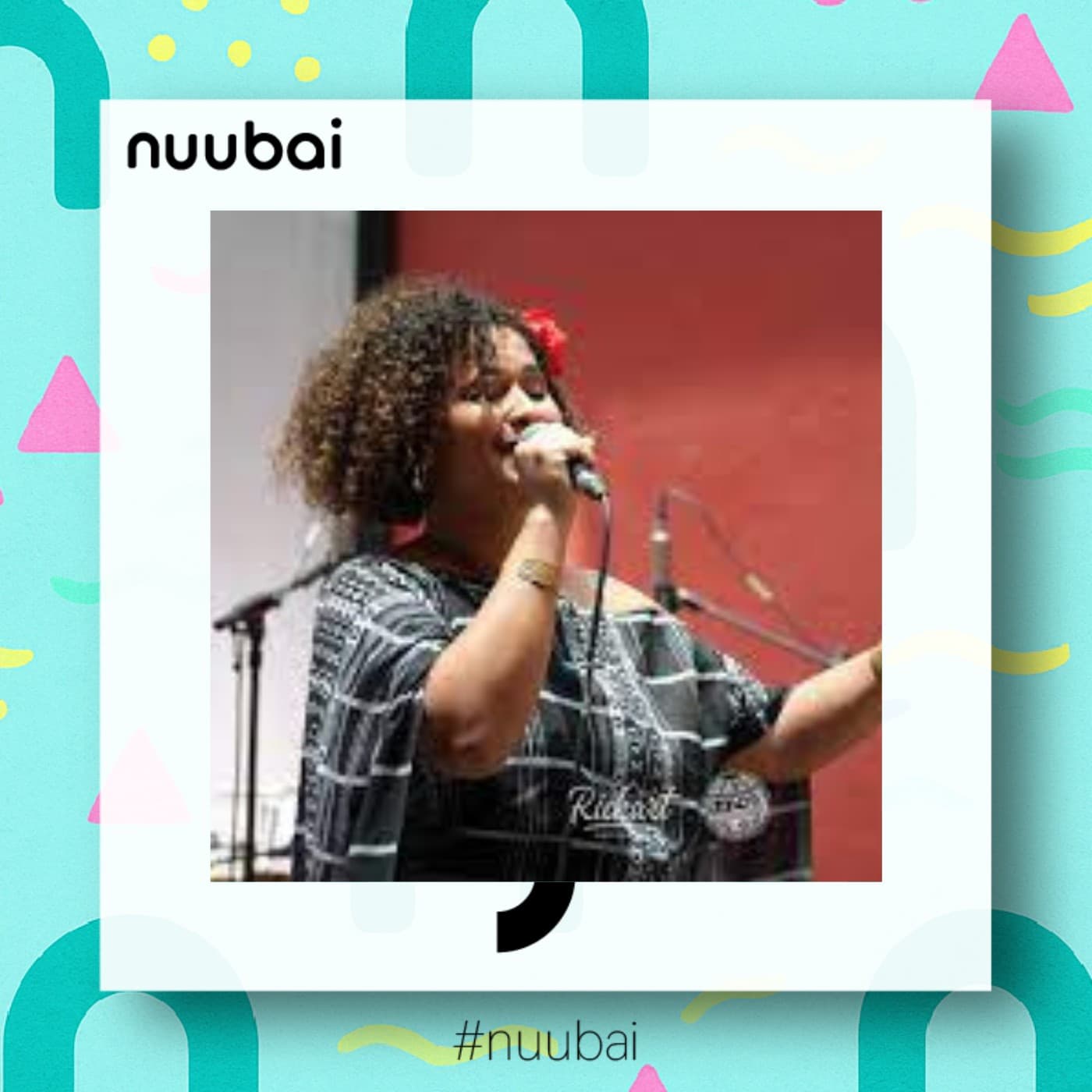
She sang a coladeira… then came the mornas. Yacine's simplicity was so great and so natural — a whole in which everything made sense. That greatness, translated into restrained yet expressive gestures, made it clear she was made for bigger stages — both in physical scale and in concept. From that moment on, whenever I could, I invited Yacine to the events I was involved in. There were many — and Yacine was always the same: music dressed in Cabo Verde.
In the dress, the nine islands; and the tenth — Fogo — always present in the flower she wears in her hair when she steps onto the stages she falls in love with (which I believe is nearly all of them). Fogo, an island of precious rhythms, sometimes forgotten in the musical landscape. I remember the day I watched her perform a Bandera. In that moment I understood: everything in Yacine is music in a state of boiling.
Her voice reaches enormous intensities within seconds, always aligned with what the lyric demands. Yacine does not merely sing — she interprets. She blends music and theatre into a scenic power that sweeps you away. The creativity in Yacine is enough to make the simple become much more. Even when working with classic themes, she never fails to add brushstrokes of her own invention — nothing happens by accident.
I return to the word simplicity. There is heat and intensity, but always in precise doses, without excess. And there is the gaze — her greatest ally on stage. A natural and discreet look that holds the audience gently, like the sails of a boat dancing to the rhythm she sets. If the sails tremble in the wind, Yacine's gentle sway accompanies them. Her movements are only what is necessary — understated, but with enough force to fill the space.
Yacine is image, is presence — the living definition of what performance courses teach us, theoretically, about the meaning of the word frontwoman. She carries Fogo in the flower in her hair, the islands in her dress, and in her gaze, the quiet intensity that will inevitably carry her into the world.
The world already has Yacine. It is simply waiting to confirm it.
Months ago she shone at an international festival on the African continent in Mozambique; I have no doubt she will now do the same on the great stages of world music, beginning with this Italian World Beat. So, Yacine… we will probably meet again across the islands, on one of those stages like the one where I first saw you — because the stage is yours.
And I am left with one certainty: every stage will be grand when it is yours. Intensely yours.
In the dress, the sea and the islands
In the flower, the world and the island