
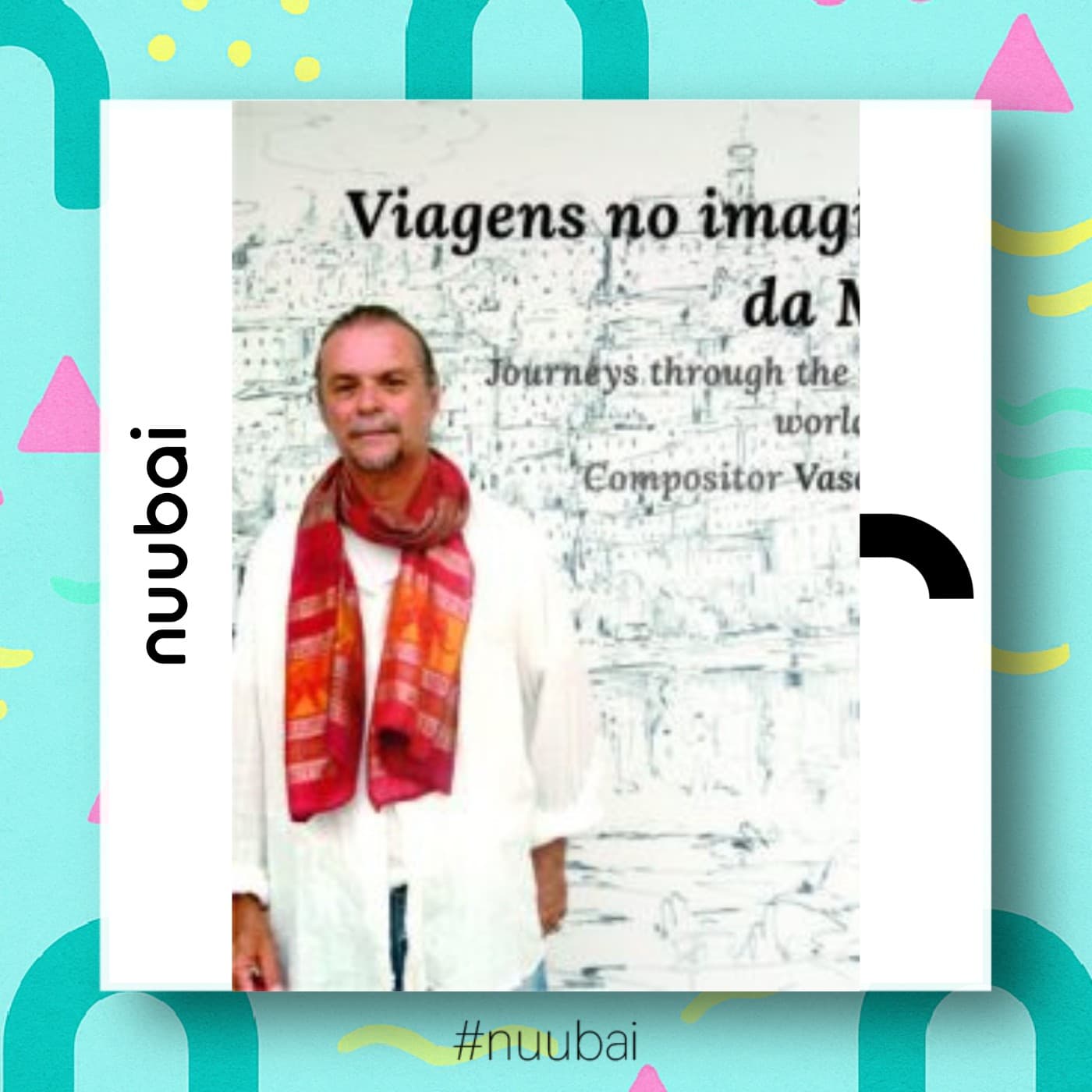
[ I came across this article written some years ago in Expresso das Ilhas, where Vasco Martins and the morna meet — and the morna celebrates its day this month. My admiration for Vasco runs deep, born many years ago when I produced one of my first concerts at the unforgettable Fesquintal de Jazz. This particular record marked me in a special way — it was the only work by Vasco Martins I distributed professionally, and I keep it close, just as I keep Vasco himself. I leave here the 2016 text, as current and alive as the day it was written. ]
The morna has been, since its very first appearance, a source of inspiration for composers across generations.
Vasco Martins draws on it to build the pieces of his latest work — "Viagens no imaginário da Morna" (Journeys in the Imaginary of the Morna). At a time when the morna was preparing its candidacy for UNESCO recognition as Intangible Cultural Heritage of Humanity, no work could have been more fitting — one that almost seemed to celebrate that moment before it arrived.
Throughout the album, Martins surfaces what he sees as the morna's deeper influences: Fado, and the Luso-Brazilian Modinha among them.
So let us dive into the sketches of these sounds and follow the journey Vasco proposes.
We begin at "Canto das ilhas" — Song of the Islands. Moving on, "4 notas na cidade" brings familiar sonorities. Martins grounds the piece in the São Vicente street cry of the fish sellers — "oli cavala fresk" — and with quiet magic carries it toward the morna, or toward the symphonic work built on the morna, depending on where the listener chooses to land.
Next comes a striking title: "Como uma moeda de prata" — Like a Silver Coin. The composition is dedicated to António Aurélio Gonçalves and closes with a reference to the Mazurca, the rhythm beloved of Nhô Roque. Beyond the beautiful story behind the title — which belongs to the writer — the music itself is of a stunning beauty.
Before reaching "Noites Mágicas" — Magical Nights — inspired by B.Leza's "Noite de Mindelo," we hear in the distance the Portuguese guitar of Ricardo Silva, calling to mind "Um deserto ao Sul." The journey closes with "Airoso," where the quiet presence of a hymn can be felt. The author describes it as a tribute to Eugénio Tavares, who composed several.
Led by the Orquestra Clássica do Centro under Maestro José Eduardo Gomes, the journey is one worth taking.
In Vasco Martins' own words: "my testimony as a composer to the greatness of the morna — artistic, human, and spiritual." Pure sharing.
Text originally published in the print edition of Expresso das Ilhas, no. 762, 6 July 2016.